
If you are using a UK independent school ranking to plan a move from Hong Kong, do not treat the first school on a league table as an automatic first choice. The strongest independent schools differ sharply in curriculum, admissions selectivity, boarding culture, location and cost. A school that is ideal for a London-based day pupil may be impractical for a Hong Kong family looking for full boarding.
There is also no single official government ranking of the best schools in UK. Independent-school league tables are compiled by newspapers, education platforms and other organisations using different combinations of GCSE, A-level or IB results, university progression and school data. Their order can therefore change even when the underlying schools remain academically very strong.
This 2026 guide uses a broader approach. Public examination performance matters, but so do university outcomes, curriculum breadth, established academic reputation, boarding or day-school structure and the practical experience of an overseas family. Current fees are considered as well, because the difference between a London day school and a full boarding school can exceed £25,000 a year before extras.
Cost also needs to be read carefully in 2026. Private-school education and boarding are subject to the standard 20% VAT rate. Meanwhile, the Independent Schools Council’s 2026 Census reports average termly fees before VAT of £14,735 for senior boarding pupils, £8,928 for day pupils attending boarding schools and £6,492 for senior pupils at day schools. Many of the highly selective schools in this ranking sit materially above those sector averages.
For Hong Kong families, I would therefore use this UK independent school ranking in two stages: first to identify academically credible schools, then to remove options that do not fit your child’s curriculum, boarding needs, location, admissions profile or budget.
UK Independent School Ranking: Best Schools in UK
The phrase best schools in UK can be misleading if it implies that every family should end up with the same shortlist. The more useful question is which schools remain strong when you compare several dimensions rather than one examination statistic.
This ranking considers the following factors:
- GCSE, IGCSE, A-level or IB performance: recent public examination outcomes help show academic strength, although schools using different qualifications cannot always be compared directly.
- University progression: first-choice university success, Oxbridge outcomes, Russell Group destinations and international university offers provide useful context for sixth-form support.
- Academic reputation: a long record of competitive admissions and consistently strong results can matter more than a one-year movement in a league table.
- Curriculum breadth: subject choice becomes particularly important for pupils considering medicine, engineering, economics, humanities, languages, music or other specialist routes.
- Co-curricular opportunities: sport, music, drama, societies, academic competitions and service programmes can materially shape a pupil’s school experience.
- Boarding and pastoral provision: this is especially important for overseas pupils whose families are based in Hong Kong.
- Practical fit: location, airport access, school transport, weekend arrangements and fees can determine whether an otherwise excellent school is workable.
| Criterion | What Is Considered | Why It Matters | Limitation |
|---|---|---|---|
| Public examination performance | Current GCSE/IGCSE, A-level or IB results where schools publish comparable figures | Shows academic outcomes at key qualification stages | Schools use different qualifications, cohorts and reporting methods. |
| University progression | First-choice offers, Oxbridge, Russell Group and international destinations where disclosed | Helps families understand sixth-form preparation | Destinations also reflect the selectivity of the pupil intake. |
| Academic reputation and selectivity | 2026 league tables, awards, admissions competitiveness and longer-term track record | Adds context beyond one examination cycle | Reputation does not prove that a school suits your child. |
| Curriculum breadth | A-level, IB and GCSE/IGCSE choices plus languages, arts and STEM | Important for specialist interests and university prerequisites | More subjects do not automatically mean better teaching. |
| Co-curricular and pastoral breadth | Sport, music, drama, societies, service, boarding and pastoral provision | Affects daily life and personal development | Quality is difficult to reduce to one numerical score. |
| Practical fit | Boarding/day structure, location, travel, airport access and costs | Can determine whether a school is realistic for an overseas family | The answer varies significantly by family. |
Source basis: 2026 independent-school league tables, the ISC 2026 Census and current school examination, admissions and fee information. Full URLs are listed in the References section.
One useful warning when reading league tables is that a specialist institution can rank extremely highly without being comparable to a conventional 11–18 or 13–18 independent school. For example, some 2026 tables place specialist mathematics and science colleges near the top. That result can be perfectly valid within the table’s methodology, but it does not mean the institution is a substitute for a traditional boarding school or all-round senior school.
This is why the shortlist below concentrates on schools that are more likely to be compared by Hong Kong families planning a mainstream independent-school route.
Top Academic Independent Schools
For pure academic strength, St Paul’s Girls’ School, St Paul’s School, King’s College School Wimbledon, Westminster School, Brighton College, Guildford High School and Sevenoaks School all deserve serious attention in 2026.
St Paul’s Girls’ School remains one of the strongest academic day-school names in England and sits at the top of prominent 2026 independent-school comparisons. It is highly selective, academically intense and particularly relevant to families who will be living in London rather than seeking boarding.
St Paul’s School offers an unusually useful piece of current evidence because its 2026 A-level results are already published. A total of 60% of A-level grades were A*, while 91.5% were A* or A. The school also reported that 87% of pupils met the offer for their first-choice university and 98% met either their first-choice or insurance offer.
That level of performance is impressive, but the university statistic is arguably as useful as the grade statistic. A school can produce exceptional A-level results while still differing substantially in how it guides pupils through university subject selection, entrance tests and applications.
King’s College School Wimbledon is particularly interesting because its Sixth Form offers both A levels and the IB Diploma. Its 2026 IB cohort achieved an average of 42.5 points, which the school described as its highest IB average to date. That makes King’s especially attractive if your child is academically very strong but you have not yet decided between A levels and IB.
Brighton College also reported a very strong 2026 examination cycle, including 350 A* grades. Fifty-two pupils achieved at least three A* grades, 25 achieved at least four and seven achieved five A*s. Its university destinations and co-curricular breadth make it particularly relevant when you want academic intensity without giving up a genuine boarding option.
Sevenoaks School deserves separate treatment because comparing its IB results directly with A-level percentages is not particularly meaningful. It is one of the UK’s best-known IB schools and was identified as the top all-IB independent secondary school in Parent Power 2026. If your family has already decided on IB, Sevenoaks may reasonably sit much higher on your personal ranking than an A-level school with stronger headline percentages.
Westminster also remains a serious academic option, particularly for older pupils entering at 13+ or 16+. Its A-level curriculum spans 23 subjects, while pupils entering GCSE years can choose from a particularly broad academic menu. For a highly academic pupil who wants London and can manage the admissions competition, its position should not be judged by one year’s league-table movement.
The underlying lesson is that academic ranking should be qualification-specific. Compare A-level schools primarily with other A-level schools, IB schools with strong IB schools, and then look at how each school’s curriculum connects to your child’s intended university route.
Leading Boarding Schools
For a Hong Kong family without a parent living close to the school, the boarding question can be more important than a difference of five places in a UK independent school ranking.
Eton College, Wycombe Abbey, Winchester College, Brighton College and Sevenoaks School all provide serious boarding options, but their models are not identical.
Eton is built around full boarding. For a pupil aged 13–18 whose family remains in Hong Kong, that can make day-to-day arrangements relatively straightforward: the child is joining a community in which boarding is the normal school experience rather than an add-on for a small proportion of pupils.
Wycombe Abbey similarly has a strong boarding identity for girls. Its High Wycombe location also makes it practical for overseas families: the school is around 35 miles west of central London, with Heathrow accessible by road. In 2026/27, boarding costs £21,500 per term, or £64,500 for three terms. Day fees are £16,400 per term.
Winchester College offers both boarding and day places. Its published 2026/27 boarding fee is £20,700 per term, equivalent to £62,100 across three terms, while day fees are £15,318 per term. International families should also budget beyond the tuition figure because visa-related administration, deposits, examinations, trips and individual activities can add to the total.
Brighton College gives families a different type of flexibility because it offers day, weekly boarding and full boarding places in the senior years. For 2026/27, published UK-pupil Year 9–13 fees including VAT and the school’s price support range from £12,648 to £13,259 per term for day pupils and £21,965 to £23,187 for full boarders. Weekly boarding sits between the two.
That flexibility can be useful, but you should not assume that switching between full boarding, weekly boarding and day status is always possible. Schools plan boarding-house capacity carefully, so a family’s preferred arrangement should be confirmed before accepting the place.
Sevenoaks combines boarding with a co-educational IB environment. Its 2026/27 middle-school boarding fees are £20,472 per term, while Sixth Form boarding starts at £20,639 for continuing pupils and is higher for new Sixth Form entrants. For families seeking IB plus boarding within reasonable reach of London, that combination is relatively unusual.
Other schools worth investigating include Cheltenham Ladies’ College, Cheltenham College, Marlborough College, Rugby School, Oundle School and Sedbergh School. Their value is not simply historic reputation. A traditional boarding campus can provide weekend sport, activities and social life that a small boarding provision attached to a mainly day school may not replicate.
When comparing boarding schools, ask more specific questions than “Does the school board?”:
- What proportion of pupils are full boarders?
- How many pupils remain at school during ordinary weekends?
- Is weekly boarding different from full boarding?
- How often are exeats or compulsory leave weekends?
- What happens when pupils cannot fly home?
- How does the school handle airport transfers?
- Which year groups live in each house?
- How much weekend activity is genuinely organised?
- What guardianship arrangements does the school require for overseas pupils?
A high ranking cannot answer those questions, yet they can determine whether a Hong Kong pupil feels settled after the first few months.
Strong Day School Options
Some of the best schools in UK are fundamentally day-school choices. St Paul’s Girls’ School, King’s College School Wimbledon, Guildford High School and several leading London schools make the most sense when the pupil lives with family or another appropriate arrangement within commuting distance.
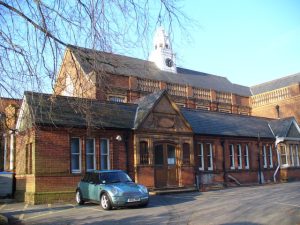
St Paul’s Girls’ School is in Hammersmith and St Paul’s School is in Barnes. King’s is in Wimbledon. Westminster is in central London and offers both day and boarding routes. These schools can be geographically close on a national map while producing very different daily commutes depending on where the family actually lives.
Guildford High School provides another attractive day-school alternative outside central London. Its senior fees are around £26,769 a year on the current 2026/27 schedule, materially below several London peers in this shortlist. For a family living in Surrey, the combination of academic strength and a manageable commute can be more compelling than travelling across London for a school ranked slightly higher.
Withington Girls’ School and Manchester Grammar School are similarly important reminders that elite independent day education is not confined to London and the South East. Withington appears in the Tatler Schools Guide 2026 and continues to be recognised for very strong academic performance alongside a wide co-curricular programme.
Day schooling can also change the total financial comparison. You avoid boarding fees, but a Hong Kong family may instead need to fund family accommodation, local living costs and commuting. A £35,000 London day school is not automatically cheaper in practical terms than a £60,000 boarding school if maintaining an additional UK household is necessary.
For families relocating to Britain, however, a day school can provide more daily contact with the child and a clearer separation between family life and school life. That is a genuine educational preference, not simply a budget decision.
Top 10 Private Schools in England Compared
The term private school is commonly used interchangeably with independent school in England, although independent is generally the term used by the sector itself. The top 10 private schools in England below are therefore a practical editorial shortlist rather than an official national ranking.
The order gives academic performance significant weight but deliberately avoids using examination results alone. It also considers university progression, curriculum, boarding/day structure, breadth of opportunities and relevance to Hong Kong families.
| School | Location & Format | Curriculum / Age | Approx. 2026/27 Fee & Key Strength |
|---|---|---|---|
| 1. St Paul’s Girls’ School | Hammersmith, London; day | 11–18; GCSE + A levels | About £37,242–£40,227 a year for current/new Sixth Form fee bands. Exceptional academic reputation and consistently elite exam performance. |
| 2. St Paul’s School | Barnes, London; mainly day with boarding available | 13–18 senior school; GCSE/IGCSE + A levels | Day £37,998 a year; boarding £57,543. In 2026, 60% of A levels were A* and 91.5% A*/A. |
| 3. King’s College School, Wimbledon | Wimbledon, London; day | 7–18; GCSE/IGCSE; A levels and IB in Sixth Form | Senior fee about £35,820 a year. Its 2026 IB average was 42.5 points. |
| 4. Westminster School | Westminster, London; day and boarding | 13–18; GCSE/IGCSE + A levels | Day about £49,368–£52,446 a year; boarding £69,282. Very broad academics and strong university preparation. |
| 5. Brighton College | Brighton, East Sussex; day, weekly and full boarding | 11–18 senior route; GCSE/IGCSE + A levels | Years 9–13 day about £37,944–£39,777; full boarding about £65,895–£69,561. 2026 results included 350 A* grades. |
| 6. Guildford High School | Guildford, Surrey; day | 4–18; GCSE + A levels | Senior fee about £26,769 a year. Strong academics with a lower day-school fee than several central London peers. |
| 7. Wycombe Abbey | High Wycombe, Buckinghamshire; boarding and day | 11–18; GCSE/IGCSE + A levels | Boarding £64,500 a year; day £49,200. Highly academic girls’ school with a strong boarding culture. |
| 8. Sevenoaks School | Sevenoaks, Kent; day and boarding | 11–18; IB-focused senior curriculum | Day about £37,542–£43,383; boarding £61,416–£67,149. Named the top all-IB independent secondary school in Parent Power 2026. |
| 9. Winchester College | Winchester, Hampshire; boarding and day | 13–18; GCSE/IGCSE + A levels | Boarding £62,100 a year; day £45,954. Strong academic tradition, boarding depth and university preparation. |
| 10. Eton College | Windsor, Berkshire; full boarding | 13–18 boys; GCSE/IGCSE + A levels | £65,673 a year. Full-boarding environment with exceptionally broad academic and co-curricular resources. |
Source basis: current 2026/27 school fee schedules and school profiles. Figures are approximate annualised tuition or tuition-and-boarding costs and may exclude registration, deposits, examination charges, trips, individual lessons and other extras. Full URLs are provided in References.
There are several points to keep in mind when using this top 10 private schools in England comparison.
- Rank does not equal admissions probability. All ten schools are selective. A school placed eighth is not necessarily easier to enter than one placed fourth.
- The fee column is not the complete family budget. Registration fees, deposits, guardianship, travel, uniforms, music tuition, trips and examinations can materially increase annual spending.
- Day and boarding fees solve different problems. You should not compare £38,000 day tuition with £62,000 boarding tuition without considering where the child will live.
- IB and A levels should not be ranked as though they were the same qualification. If your child clearly suits one system, curriculum fit should override a few places in an overall table.
- Entry age matters. Eton and the senior section of St Paul’s are principally 13+ routes, while schools such as Wycombe Abbey, Sevenoaks and St Paul’s Girls’ School provide important 11+ entry points.
- Sixth Form entry can have a separate fee and admissions structure. Do not assume that a school’s 13+ arrangements apply unchanged at 16+.
A useful way to build your own version of the top 10 is to give each school four personal scores: academic fit, admissions realism, boarding/location fit and total cost. Those four figures are often more useful than copying a national league-table position.
Best UK Independent Schools by Region
Location is not a cosmetic detail when choosing among the best schools in UK. It affects whether a child boards, how easily parents can visit, the cost and complexity of airport transfers, whether weekend travel is realistic and the overall environment in which the child will spend most of the year.
The detailed regional breakdown below follows the England-focused shortlist used in this article. Families considering Scotland, Wales or Northern Ireland should assess those systems separately rather than assuming that every UK school follows exactly the same curriculum and examination structure.
| Region | Recommended Schools | Typical Format | Practical Location Note |
|---|---|---|---|
| London and Greater London | St Paul’s Girls’ School; St Paul’s School; King’s College School Wimbledon; Westminster School; Highgate School; North London Collegiate School | Mostly highly selective day schools; limited boarding at some senior schools | Excellent access to London and Heathrow, but commuting and accommodation costs need careful planning. |
| South East England | Brighton College; Sevenoaks School; Wycombe Abbey; Eton College; Winchester College; Guildford High School | Mix of elite day schools, weekly boarding and full boarding | Useful for Heathrow or Gatwick access; settings range from coastal Brighton to traditional boarding campuses. |
| South West and Central England | Cheltenham Ladies’ College; Cheltenham College; Marlborough College; Rugby School; Oundle School; King Edward’s School Birmingham | Many established boarding schools plus strong city day options | Often offers larger campuses and a traditional boarding environment, but airport and exeat logistics require planning. |
| Northern England | Manchester Grammar School; Withington Girls’ School; Manchester High School for Girls; St Peter’s School York; Queen Ethelburga’s Collegiate; Sedbergh School | Strong urban day schools plus boarding options in Yorkshire and Cumbria | Excellent academic choices outside the South East; Manchester Airport is useful for international travel, while rural boarding schools require transfer planning. |
Source basis: current 2026 school comparison sources and individual school information. This table is geographical rather than a second overall ranking.
London and Greater London
London offers perhaps the greatest concentration of highly selective independent day schools in England. St Paul’s Girls’ School, St Paul’s School, King’s College School Wimbledon, Westminster School, Highgate School and North London Collegiate School can all appear on an academically ambitious family’s research list.
The advantage for Hong Kong families relocating to London is obvious: if a parent already works in the city, you may be able to combine an elite independent education with normal family life rather than boarding.
The disadvantage is equally practical. London commuting can turn a school that appears close on a map into a demanding daily journey.
A child travelling from Canary Wharf to Wimbledon, for example, experiences a very different school day from one living locally in south-west London. When choosing a day school, I would normally test the real morning route before making a final decision.
London fees also tend to be relatively high. The ISC 2026 Census puts the average termly fee for London day schools at £7,580 before VAT, compared with £4,473 in the North West. The most academically selective London schools can sit well above even that London average.
For overseas families, one more issue requires checking: whether the school can accommodate your child’s immigration and living arrangements. A strong day school is not automatically an appropriate overseas-student school simply because its academic reputation is exceptional.
If you already have a stable family base in London, however, the capital’s leading schools can give you the widest range of elite day-school options in this UK independent school ranking.
South East England
The South East is arguably the most versatile region for Hong Kong families because it combines strong day schools with several of England’s most recognisable boarding schools.
Brighton College gives you day, weekly boarding and full boarding options. Sevenoaks combines boarding with IB. Wycombe Abbey and Eton offer strong boarding cultures. Winchester adds another established boarding route, while Guildford High is a strong day-school option.
Airport geography can be useful too. Schools in Surrey, Kent, Berkshire and Buckinghamshire can often be reached without travelling through the centre of London. Brighton is naturally more convenient for Gatwick than many schools further north, while Wycombe Abbey states that Heathrow is about 30 minutes away by road under favourable conditions.
That does not mean airport distance should dominate school choice. A pupil makes airport transfers a handful of times each term but lives at the school every day. Campus environment and boarding quality matter much more over the long run.
South East schools also vary enormously in setting. Eton is beside Windsor. Sevenoaks sits in Kent. Brighton provides a coastal urban environment. Wycombe Abbey has a more enclosed campus feel. Winchester offers a historic cathedral-city setting.
For a child moving from Hong Kong, those differences can influence adaptation more than parents expect. A pupil who enjoys city life may respond very differently to a rural boarding campus from one who wants space, sport and a close residential community.
South West and Central England
Moving west and into central England opens up another group of traditional independent schools, many with a strong boarding identity.
Cheltenham Ladies’ College and Cheltenham College are natural Gloucestershire options. Marlborough College is one of the better-known boarding schools in Wiltshire. Rugby School and Oundle School provide substantial boarding communities further east within the central part of England, while Birmingham offers important day-school alternatives such as King Edward’s School.
Families sometimes overlook these schools because London names dominate international conversations. That can be a mistake.
A larger boarding campus outside London may offer more playing fields, a higher proportion of boarders and a weekend programme built around residential pupils. For a Hong Kong student whose parents remain overseas, that structure can be more important than being able to reach central London in 30 minutes.
The trade-off is transport.
You need to know what happens at the beginning and end of term, on exeat weekends and when a flight is delayed. Some families use Heathrow even for schools well outside the South East; others find Birmingham or regional airports more practical. The school may operate transfer arrangements on particular dates, but you should confirm these before assuming airport logistics will be simple.
This region is especially worth considering if your priorities are full boarding, campus life and a traditional UK independent-school experience rather than daily proximity to London.
Northern England
Northern England deserves more attention in any serious list of the best schools in UK.
Manchester has several particularly strong independent day schools. Withington Girls’ School and Manchester Grammar School are among the best-known academically, while Manchester High School for Girls is another established option.
Withington’s inclusion in the Tatler Schools Guide 2026 highlights the combination that makes it attractive: a strongly academic environment alongside substantial co-curricular opportunities. For a family moving to Greater Manchester rather than London, it should be compared with leading southern day schools on educational fit rather than treated as a regional fallback.
Yorkshire broadens the range. St Peter’s School York offers a historic independent-school environment, while Queen Ethelburga’s provides a boarding-oriented option. Further north-west, Sedbergh is relevant to families interested in a residential school culture and extensive sport.
The cost picture can also differ. Sector averages outside London are generally lower, although elite boarding schools can still have fees comparable with schools in the South East.
Manchester Airport makes the region easier for international families than the word “north” may initially suggest, although a rural school in Cumbria or Yorkshire will still need a road transfer after the flight.
For Hong Kong parents, I would not reject northern schools simply because family friends know more London names. The better approach is to ask whether the school offers the academic standard, boarding or day arrangement and university preparation your child needs.
That principle applies to the entire 2026 UK independent school ranking. A prestigious school is only useful if your child can enter it, afford to stay there, manage the curriculum and build a sustainable daily life.
The ranking should create your research list. Your child’s academic profile, personality, boarding needs and family logistics should decide the final order.
References
- HK Edu Journey — Iris Leung Author Profile. Author background and the site’s independent Hong Kong education advisory positioning. https://hkedujourney.com/author/
- School Guide — Independent School League Tables 2026. Current 2026 external league-table benchmark and methodology context. https://www.schoolguide.co.uk/league_tables/independent
- Independent Schools Council — ISC Census 2026. Sector-wide 2026 fee averages, school numbers and regional fee comparisons. https://www.isc.co.uk/media/5rmduu0j/2026-06-isc-census-2026.pdf
GOV.UK — VAT on Private School Fees. Official guidance on the 20% VAT treatment applicable to private-school education and boarding in 2026. https://www.gov.uk/government/publications/vat-on-private-school-fees - Current Academic Results — St Paul’s School, King’s College School Wimbledon, Brighton College and Sevenoaks School. https://www.stpaulsschool.org.uk/a-level-results-2026/
https://www.kcs.org.uk/senior-school/academic-life/examination-results
https://www.brightoncollege.org.uk/news/a-level-results-2026
https://www.sevenoaksschool.org/parent-power-2026/ - London and Day-School Fee / Profile Sources — St Paul’s Girls’ School, St Paul’s School, King’s College School Wimbledon, Westminster School and Guildford High School. https://gsa.uk.com/school/st-pauls-girls-school/
https://www.international-schools-database.com/in/london/king%27s-college-school-wimbledon-london/fees
https://www.goodschoolsguide.co.uk/uk-schools/review/guildford-high-school - Current Boarding Fee Sources — Brighton College, Wycombe Abbey, Sevenoaks School, Winchester College and Eton College. https://www.brightoncollege.org.uk/assets/files/uploads/brighton-college-uk-boarding-and-day-fees-structure-2026-27.pdf
https://www.etoncollege.com/admissions/fees/ - Regional and Northern England Comparison Sources — Withington Girls’ School and current Greater Manchester / York independent-school comparisons. https://www.wgs.org/news-views-events/tatler-schools-guide-2026/
https://pip11plus.com/best-schools-in-greater-manchester.html
https://findmyschool.uk/best-independent-secondary-schools/york - Additional 2026 Parent Power Context — current national and regional independent-school comparison, including Brighton College and other leading schools outside London. https://www.timeout.com/uk/news/this-is-officially-the-best-school-in-britain-for-2026-outside-london-120925
Disclaimer
The content of this article reflects the author’s personal views and is provided for informational purposes only. It should not be regarded as professional investment, medical, legal, employment, or other specialist advice. Some information in this article is sourced from publicly available online materials. If any content is found to infringe copyright, please contact the website administrator for prompt removal or correction.
Readers are solely responsible for any actions taken based on the information provided in this article. The website accepts no legal liability for any risks, losses, or damages arising from such actions.
For more details, please see the Disclaimer.