
If you are looking for A-Level schools in Hong Kong, do not start with a general international-school ranking. Start with the Sixth Form qualification. Many well-known international schools in Hong Kong finish with the IB Diploma, AP or another curriculum, while only a smaller group offers GCE A Levels, Cambridge International A Levels or Pearson Edexcel International A Levels.
That distinction affects much more than the name printed on the qualification. It changes subject choice, examination structure, Year 12 entry requirements, university planning and, in some cases, how easily a student can transfer into the school after completing IGCSEs or another curriculum elsewhere.
Cost also varies sharply. In 2026, the published Secondary or Sixth Form tuition among the A-Level providers compared in this guide ranges from around HK$143,200 at Korean International School to provisional Year 12–13 tuition of HK$279,100 at Kellett School. Capital levies, external examination fees, application charges, transport and devices can push the real annual cost higher.
For families comparing the best international schools in Hong Kong, the practical solution is therefore to narrow the market in this order: A-Level route → subjects available → entry requirements → total cost → university pathway → school environment.
What Types of A-Level Schools Are Available in Hong Kong?
The phrase “A-Level school” does not describe one official category of school in Hong Kong.
You will find A-Level programmes in several settings. Some providers are on the Education Bureau’s list of international schools in Hong Kong. Others are registered private schools following British or Cambridge curricula. A smaller number of local-school providers may also operate a GCE A-Level stream alongside another senior-secondary pathway.
This matters because two schools teaching A Levels can have completely different admissions models.
A large British international school may provide a conventional Years 7–13 journey, university counselling, Houses, extensive sport and a broad Sixth Form enrichment programme. A smaller private school may focus more tightly on Cambridge International qualifications and offer a lower tuition point. A local school offering a GCE stream may have another fee structure again.
The first step is therefore to identify the type of environment you want rather than searching for “A-Level” alone.
| Route Type | Representative Providers | Qualification Pattern | Who It May Suit |
|---|---|---|---|
| EDB-listed international schools | Kellett School; Harrow International School Hong Kong; Discovery Bay International School; Korean International School | British or international curricula leading to GCE A Levels, International A Levels or Cambridge International AS & A Levels depending on school and subject | Families wanting a complete international-school environment with Sixth Form, university counselling and wider school life |
| Private British / Cambridge schools | Invictus Secondary School; Wycombe Abbey School Hong Kong | Cambridge International A Levels or another British-style A-Level route; board and subject availability vary | Families prioritising A-Level access, smaller-school options or potentially lower fees than some premium international schools |
| Local-school GCE pathway | HKBUAS Wong Kam Fai and other schools that may offer a GCE A-Level stream | GCE A-Level route within a local-school environment | Students who want an A-Level qualification without necessarily joining a conventional international school |
| Subject-specific exam-board model | AQA, Pearson Edexcel, Cambridge International and other UK boards may be used | One school may use different examination boards for different A-Level subjects | Students who need to compare specifications, assessment structure and university prerequisites subject by subject |
Source note: School status and curriculum information were cross-checked against current Education Bureau records and school curriculum pages available in 2026. These categories are a practical comparison framework rather than formal legal classifications.
English International Schools in Hong Kong Offering A-Level
Among English international schools in Hong Kong, four particularly clear A-Level options are Kellett School, Harrow International School Hong Kong, Discovery Bay International School and the International Section of Korean International School.
Kellett in Kowloon Bay follows a British pathway through I/GCSEs to GCE A Levels. Its Sixth Form offers more than 20 A-Level subjects and normally expects students to take three, although a four-subject programme can be approved in selected cases. The school also combines A Levels with EPQ, careers guidance, university counselling and other Sixth Form activities.
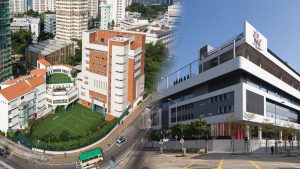
Harrow Hong Kong in Tuen Mun also follows a British route. Sixth Form students typically take three A Levels plus an Extended Project Qualification, with a small number taking four A Levels. Unlike Kellett, Harrow also offers weekly boarding from Year 6 upwards, which can materially change both lifestyle and cost.
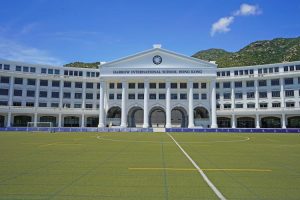
DBIS in Discovery Bay moves from the English National Curriculum and IGCSE into a dedicated Sixth Form. Students normally choose three or four A-Level subjects in Year 12, with most continuing three in Year 13. BTEC Level 3 options are also available, giving the school more flexibility for students who do not want an exclusively examination-based A-Level package.
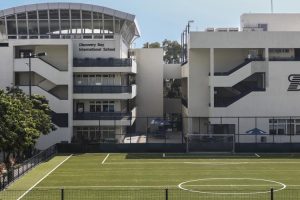
Korean International School‘s International Section in Sai Wan Ho offers a lower-fee British/Cambridge pathway. Its current Secondary curriculum progresses from IGCSE into A Levels in Years 12–13. Many subjects follow Cambridge International AS & A Levels, although particular departments may use another UK board: Mathematics, for example, currently uses AQA.
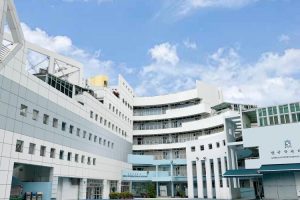
That last example is important. Do not assume that a school has a single examination board for every subject. Ask for the current Year 12 options booklet and check each proposed subject.
Private and Independent A-Level Schools
The wider A-Level market extends beyond the Education Bureau’s international-school directory.
Invictus Secondary School in Chai Wan is a useful example. The school runs from Year 7 to Year 13 and follows Cambridge Lower Secondary, Cambridge IGCSE and then Cambridge International A Levels. Its current school information states that students generally study three or four A-Level subjects initially and choose combinations around their intended university course.
The Education Bureau’s private-school register, updated in 2026, lists Invictus as a private secondary school following the Cambridge International curriculum rather than as one of the schools in the separate international-school directory.
This legal or administrative distinction should not be confused with the qualification itself. A Cambridge International A Level does not become a different qualification because the provider appears in a different EDB school list.
Wycombe Abbey School Hong Kong is another private British-style option. Its Senior School operates in Kowloon City and now accepts Year 12 applicants. Its current admissions process is quite targeted for Sixth Form entry: Year 12 candidates complete a written English paper, written assessments in two subjects they intend to study at A Level and an interview with the Head of Admissions.
Its 2026 current annual tuition for Years 12–13 is HK$218,000, plus a HK$45,000 Annual Capital Levy.
Another route is to consider schools that operate an A-Level stream alongside a more local Hong Kong school structure. HKBUAS Wong Kam Fai, for example, has published a GCE A-Level option for senior students. This can be attractive when qualification choice matters more than having a conventional expatriate international-school environment.
The practical point is simple: do not limit your A-Level search to schools whose names contain the word “International”.
GCE A-Level vs International A-Level Schools
Parents often ask whether GCE A Levels are “better” than International A Levels. That is the wrong starting question.
Both are established subject-based qualifications used for university admissions. The more useful differences involve examination board, assessment structure, exam series and the exact syllabus your child will study.
A UK GCE A Level is the familiar qualification used by schools in England and by British schools overseas. Schools such as Kellett and Harrow broadly follow this model, although the board can vary between subjects.
Cambridge International AS & A Levels are designed for an international school market. Cambridge states that the International A Level normally takes two years. Depending on the subject, students can take the whole A Level in one examination series or use a staged route in which AS contributes towards the final A Level. Cambridge’s main international examination series are in June and November.
Pearson Edexcel International A Levels use a different structure. Most are modular, allowing students to complete units across the course and, where permitted, resit individual units. Pearson currently operates International A-Level examination series in January, May/June and October for many subjects.
This can affect the learning experience.
A student who performs well in modular assessments may like the flexibility of Pearson IAL. Another student may prefer a more linear programme with much of the assessment concentrated at the end. Cambridge has its own staged assessment possibilities, so it should not simply be described as “the linear international version”.
Universities generally care much more about whether the applicant has the right subjects and grades than whether the qualification includes the word “International”. A prospective medicine applicant, for example, should investigate Chemistry and Biology requirements. Engineering applicants often need Mathematics and Physics, while highly quantitative Economics programmes may place particular weight on Mathematics or Further Mathematics.
When you compare A-Level schools in Hong Kong, ask for five pieces of information for every intended subject:
- the examination board;
- the current syllabus code;
- whether AS is used;
- how the final grade is assessed; and
- whether the school can actually timetable your preferred subject combination.
The last point catches families surprisingly often. A school may advertise 20 A-Level subjects, but timetable blocks can still prevent a particular combination.
List of International Schools in Hong Kong Offering A-Level
The following list of international schools in Hong Kong focuses on schools that appear in the Education Bureau’s international-school sector and whose current senior curriculum clearly includes an A-Level pathway.
It is deliberately narrower than a general list of British or private schools because “international school” should not be used as a loose label for every private provider.
| School & Location | A-Level Pathway / Exam Board | Current 2026 Tuition & Major Charge | Typical Sixth Form Entry |
|---|---|---|---|
| Kellett School — Kowloon Bay | UK GCE A Levels; examination board varies by subject, including UK boards such as AQA and Pearson Edexcel | 2026/27 provisional Year 12–13 tuition HK$279,100; HK$40,000 Annual Capital Levy for new offers unless covered by an eligible debenture arrangement | Year 12; at least five GCSEs at Grade 6/B+ including English and Maths, plus subject-specific A-Level thresholds |
| Harrow International School Hong Kong — Tuen Mun | Two-year UK A-Level programme; normally three A Levels plus EPQ; board varies by subject | Current published Sixth Form tuition accessed in 2026: HK$239,070; HK$60,000 Annual Capital Levy without qualifying capital cover; confirm final approved 2026/27 tuition | Year 12; interview, subject papers, online Maths/English/Non-Verbal tests, reports and reference; offer conditional on GCSE/equivalent results |
| Discovery Bay International School — Discovery Bay | International A Level / A Level plus BTEC Level 3; Pearson Edexcel and Cambridge International can be used depending on subject | Current EDB profile lists annual tuition up to HK$196,900; Years 12–13 excluded from the standard School Development Levy on acceptance; exams and textbooks extra | Year 12; year-round application, availability check, assessment and interview; current Sixth Form subject requirements must be met |
| Korean International School, International Section — Sai Wan Ho | Cambridge International AS & A Levels in many subjects; selected subjects use other UK boards such as AQA | 2026/27 Secondary tuition HK$143,200; application fee HK$2,000; no debenture and no capital levy | Year 12; published baseline of four IGCSEs at Grade C+ and C+ in chosen subjects; English, Maths and Non-Verbal assessment plus interview |
Source note: Current school and EDB information available in 2026. Kellett’s 2026/27 figure is provisional subject to EDB approval. Harrow’s current fee page has not separately labelled a final 2026/27 tuition schedule, so families should reconfirm the approved Year 12–13 fee before accepting an offer.
The table shows why searching only for the cheapest or most famous international school is not particularly useful.
Kellett has the highest published Sixth Form tuition among these examples, but it also offers a very broad A-Level programme and a substantial established Sixth Form structure. Korean International School is materially cheaper and has no capital levy or debenture, but its subject menu, campus environment and admissions model are different.
DBIS is geographically distinctive because it is in Discovery Bay. That can be very convenient if you live nearby and cumbersome if you live in another part of Hong Kong. Harrow is in Tuen Mun and adds the possibility of weekly boarding from Sunday evening to Friday afternoon.
Location should therefore be treated as part of educational fit, not an afterthought. A two-year Sixth Form student has fewer years left at school, but Year 12 and Year 13 are also academically intensive. A difficult daily commute can remove time that would otherwise go to independent study, activities or sleep.
How Much Do A-Level Schools in Hong Kong Cost?
A-Level schools in Hong Kong span several fee bands, and the tuition line rarely tells you the complete cost.
At the upper end of the schools covered here, Kellett’s provisional 2026/27 Sixth Form tuition is HK$279,100. Harrow’s current published Sixth Form figure accessed in 2026 is HK$239,070, before its HK$60,000 Capital Levy where applicable. Wycombe Abbey Hong Kong currently charges HK$218,000 for Years 12–13 plus a HK$45,000 Annual Capital Levy.
DBIS’s current Education Bureau profile lists tuition up to HK$196,900. Korean International School charges HK$143,200 for Secondary in 2026/27 with no debenture or capital levy. The current EDB private-school register lists Invictus Secondary School’s fee range up to HK$141,700, although families should request the school’s current Year 12 invoice before relying on that amount for a 2026/27 budget.
| Provider | Current Annual Tuition | Major Required / Likely Extra | Financial Assistance / Cost Note |
|---|---|---|---|
| Kellett School | HK$279,100 for Years 12–13, 2026/27 provisional | HK$40,000 Annual Capital Levy for new offers unless eligible debenture cover; HK$2,500 Year 5–13 application/assessment fee; examinations, bus, lunch and some trips extra | Means-tested bursary provision exists; new-entry scholarships are not generally offered under the current admissions FAQ. |
| Harrow International School Hong Kong | HK$239,070 current published Sixth Form figure accessed in 2026 | HK$60,000 Annual Capital Levy if no capital certificate/debenture; HK$1,500 application fee; examination fees and books extra in senior years | Scholarships normally reduce tuition by 10%; means-tested bursaries can provide substantially greater remission depending on need. |
| Discovery Bay International School | Current EDB profile: up to HK$196,900 | External examination fees, required textbooks and BYO laptop; Years 12–13 excluded from the standard School Development Levy on acceptance | EDB profile does not state a general financial-assistance or scholarship programme. |
| Korean International School | HK$143,200 for Secondary, 2026/27 | HK$2,000 application fee; examinations, uniform, camps, some trips, meals, bus and laptop programme can cost extra | No debenture or capital levy; published policy gives a 50% tuition reduction to the third and subsequent child in the lowest year group. |
| Invictus Secondary School | Current EDB private-school register lists fees up to HK$141,700 | Confirm current Year 12/13 fee and external examination charges directly; written assessment and interview form part of admission | Published scholarship awards can remit 25%–50% of basic annual tuition for successful applicants. |
| Wycombe Abbey School Hong Kong | HK$218,000 for Years 12–13 | HK$45,000 Annual Capital Levy; trips, school bus, lunch and ECAs extra; no application fee | The school currently states that it does not offer scholarships or financial-aid programmes. |
Source note: Figures use current 2026 school and Education Bureau information. Where a provider has not labelled a final 2026/27 tuition schedule, the current published amount is identified as such rather than being presented as a confirmed 2026/27 fee.
Annual Tuition Fees at A-Level Schools
The numbers above show a spread of more than HK$130,000 between some current fee levels.
That does not mean the most expensive school delivers twice the educational value of the least expensive one. Fees reflect campus costs, staffing, class size, facilities, co-curricular provision, capital funding models and the broader economics of each school.
You should compare what your family actually needs.
If your child wants a relatively specialised Cambridge A-Level route and does not need a very large international-school ecosystem, a lower-cost school may be entirely appropriate.
If you want 20-plus A-Level subjects, extensive university counselling, large-scale sport and arts programmes, established alumni networks and other Sixth Form enrichment, a higher-fee institution may offer facilities you will genuinely use.
Subject choice is particularly important because A Levels are specialised.
A school with lower fees becomes poor value if it does not offer Further Mathematics, Physics or the language your child needs. Conversely, paying significantly more for a school because it has 25 subjects is unnecessary if your child needs only Mathematics, Economics and History and can obtain strong teaching in those three subjects elsewhere.
Ask for the current Sixth Form subject blocks before comparing price.
Application Fees, Capital Levies and Other Costs
Kellett illustrates why tuition alone can understate the budget. In addition to provisional Sixth Form tuition of HK$279,100, new offers are subject to a HK$40,000 Annual Capital Levy unless an eligible debenture arrangement applies. The Year 5–13 application fee is HK$2,500 and includes the assessment fee.
Kellett also excludes school bus, uniform, lunch, Senior-school devices, external examination entry fees, some ECAs and overseas educational visits from tuition.
Harrow’s current application fee is HK$1,500. Pupils without the relevant capital certificate or debenture pay an annual HK$60,000 Capital Levy. Years 10–13 also have external examination fees, and senior-year textbooks are not all included.
If you choose boarding at Harrow, tuition is not the boarding fee. The current weekly boarding programme has a separate annual charge, so a family considering this route should ask Finance for a full combined Year 12 quotation.
Wycombe Abbey Hong Kong has no application fee but charges a HK$45,000 Annual Capital Levy for Years 9–13. The HK$218,000 Sixth Form tuition includes books, teaching and art materials, while class trips, buses, lunches and extracurricular activities sit outside it.
DBIS takes a different approach. Years 12 and 13 are excluded from the standard School Development Levy once the place is accepted, but Secondary students provide their own laptop and parents pay for required textbooks and external examinations.
Korean International School stands out because its published 2026/27 policy has no debenture and no capital levy. That makes its HK$143,200 tuition more directly comparable with the base amount a family will actually pay, although external examinations, uniforms, camps, selected trips, lunch, bus and technology can still be additional.
A useful budgeting formula is:
Annual tuition + mandatory capital charge + examinations + transport + meals + technology + likely activities = realistic annual school budget.
Then keep one-time application or admission costs in a separate column.
Scholarships and Financial Assistance
Financial assistance differs substantially between A-Level schools in Hong Kong.
Harrow currently has one of the clearest published systems. A scholarship normally provides a 10% reduction in tuition for excellence in areas such as academics, art, drama, music or sport. Exceptional pupils may hold more than one award.
A bursary is different. It is means-tested rather than awarded purely for achievement. Harrow states that bursary support can, in cases of sufficient financial need, provide virtually full fee remission. Families must disclose income, assets and other financial circumstances, and awards are reassessed.
Do not assume that winning a scholarship automatically solves affordability. A 10% scholarship on a high annual fee still leaves most of the tuition and capital cost to the family.
Kellett also has a bursary programme supported by its AMD Fund. Published school information describes means-tested bursary places designed to make a Kellett education available to pupils who could not otherwise afford it. However, the current admissions FAQ states that scholarships are available to existing students rather than applicants seeking to join the school.
Invictus takes a different approach. Its published scholarship programme allows successful applicants to receive 25%–50% remission of the basic annual tuition fee. Awards can recognise overall academic performance, music talent or strong potential in GCSE/A-Level programmes.
Wycombe Abbey Hong Kong currently states that it does not offer a scholarship or financial-aid programme.
When comparing financial support, ask whether an award applies to:
- tuition only;
- capital levy;
- examination fees;
- school trips;
- transport;
- uniform;
- music tuition; and
- the full two years of Sixth Form.
A headline “50% scholarship” is only meaningful once you know exactly which invoice it reduces.
How Do Admissions Work at A-Level Schools in Hong Kong?
Sixth Form entry is usually more academically specific than entering an international school at Year 7 or Year 8.
By Year 12, the school needs evidence that your child can cope with advanced study in the subjects selected. General academic ability matters, but so do previous results in Mathematics, Sciences, Languages or other intended A-Level subjects.
Admissions teams may therefore examine:
- the most recent two or three school reports;
- IGCSE, GCSE or equivalent grades;
- mock examination results;
- subject-specific prerequisites;
- English proficiency;
- Mathematics performance;
- school references;
- interviews;
- written subject assessments; and
- your proposed university or career direction.
You should not wait until final IGCSE results arrive before researching Year 12 admission. Several schools accept or encourage applications well in advance, and popular year groups can fill before final examination results are known.
Academic and A-Level Subject Requirements
Kellett publishes particularly clear minimum expectations.
External Sixth Form applicants normally need at least five GCSEs at Grade 6/B or above, including Mathematics and English. The school also looks for at least Grade 6/B in the subjects a student intends to take at A Level.
Several subjects have a higher threshold. Mathematics, Biology, Chemistry, Chinese, French, Physics and Spanish require Grade 7/A under the current published requirements.
This is useful because it shows how misleading a general requirement such as “five passes” can be. A student may satisfy the overall Sixth Form threshold but still be unable to take their intended A-Level subjects.
Harrow uses a more assessment-heavy Year 12 process. The current admissions framework includes an interview about strengths, interests and aspirations, 30-minute written papers in chosen or possible A-Level subjects, externally moderated online Mathematics, English and Non-Verbal Reasoning tests, the latest school report and a reference from the current school.
The total assessment process is approximately three hours. A Year 12 offer is conditional on GCSE or equivalent results and/or the school’s relevant testing requirements.
Korean International School publishes a baseline of four IGCSE subjects at Grade C or above for entry into its AS route, with at least Grade C in intended subjects. Individual departments can set subject prerequisites. Its Science pages, for example, require prior relevant science study and at least the specified IGCSE standard.
DBIS asks prospective Year 12 applicants to make sure they meet its Sixth Form entry requirements before submitting the application. It normally expects students to enter Year 12 with a suitable IGCSE foundation and then select three or four A-Level subjects.
Wycombe Abbey Hong Kong uses direct subject testing. A Year 12 applicant sits English plus two written papers in intended A-Level subjects. That can be particularly useful when the student is transferring from another curriculum, because the school is testing readiness rather than relying only on the title of the previous qualification.
One practical rule works across all these schools:
Check the entry threshold for each intended A-Level subject, not just the general Year 12 admission requirement.
English Requirements at International Schools
A Levels involve substantial reading, extended writing, interpretation and examination technique. Even Mathematics and Sciences require students to understand complex written instructions and communicate reasoning accurately.
English-medium A-Level schools therefore assess whether applicants can access the curriculum, although they do this differently.
Harrow explicitly states that English proficiency is necessary to access the full curriculum and participate in school life. Its Year 12 assessment includes an English component as part of the online testing process.
KIS conducts an English test for Secondary applicants because English is the International Section’s medium of instruction. It also provides English Language Support and ESL resources for students who are less proficient, subject to available support capacity.
That distinction is useful: having English-language support does not necessarily mean there is no minimum English standard for Year 12.
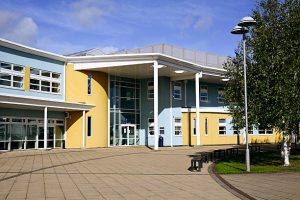
Kellett‘s general Sixth Form requirement includes GCSE English among the five Grade 6/B subjects expected at entry. A student coming from a curriculum without GCSE English should ask Admissions how an equivalent English qualification or assessment will be interpreted.
Wycombe Abbey Hong Kong tests written English directly at Year 12. Unlike its lower-year Intensive English Programme, the Senior School does not provide the same IE programme, so a Sixth Form applicant should not assume that significant language gaps can be repaired after admission.
If your child currently studies in a Hong Kong local school, ask whether the school accepts:
- HKDSE-related school results;
- IELTS or another external English result;
- internal English assessment;
- IGCSE English as a Second Language;
- IGCSE First Language English; or
- another recognised equivalent.
Do not guess equivalence from the grade letter alone. Let Admissions confirm it in writing.
Application Timelines, Interviews and Assessments
Admissions timing varies considerably, so there is no universal “Hong Kong A-Level application deadline”.
Kellett accepts Senior School applications up to two years in advance. In August 2026, the school states that its classes for the 2026/27 academic year are full. Families considering a later entry year should therefore treat early application as a practical necessity rather than assume Sixth Form places will remain available close to the start date.
Harrow publishes defined application cycles. For August 2027 Sixth Form entry, the current application deadline is 10 October 2026, with assessments scheduled across the Autumn and Spring terms. Later overseas applications can be considered if places remain and the applicant does not already have a school place in Hong Kong.
DBIS operates differently. Applications are accepted throughout the year with no fixed deadline. Completed applications enter the waiting list. When a Year 12 place is available, the school arranges an assessment and, if successful, an interview with senior leadership.
KIS also runs rolling admissions, but recommends applying around a year before entry. Assessment for the following academic year begins once vacancies are confirmed. Its Secondary admissions assessment takes approximately one hour and covers English, Mathematics and Non-Verbal Reasoning alongside the interview process.
Invictus has 2026/27 applications open and accepts Year 12 applications year-round subject to availability. Its general Secondary process includes written English and Mathematics assessment followed by an interview with the Principal or Deputy Principal.
Wycombe Abbey Hong Kong also works on rolling admissions. Applications for Year 12 are open subject to availability, and the school says applicants are normally invited to assessment within about two weeks of submission.
This creates an important planning lesson for families transferring at Sixth Form:
Do not wait for the Year 11 examination season to finish before contacting schools.
You can apply with school reports, predicted or mock grades and current academic evidence. The final offer can then remain conditional on the eventual public-examination outcome.
How to Choose the Best International Schools in Hong Kong for A-Level?
There is no single best international school for every A-Level student.
The strongest option is the one that offers the right subjects, admits your child at a realistic academic level, supports the intended university route and remains financially and logistically sustainable for two demanding Sixth Form years.
- Start with the university course, not the school name. If your child may apply for Medicine, Engineering, Economics, Computer Science or another subject with specific prerequisites, identify those requirements before choosing A Levels.
- Check the exact A-Level subject menu. “We offer A Levels” tells you almost nothing. Ask whether the school offers Further Mathematics, separate Sciences, Psychology, Economics, Computer Science, Languages, Art or other subjects your child needs.
- Ask for the timetable blocks. Three desired subjects can all exist on the prospectus yet clash in the timetable.
- Check the examination board by subject. The same school can use AQA for one subject, Pearson Edexcel for another and Cambridge International elsewhere. This affects specification and assessment.
- Decide whether your child prefers GCE or International A-Level structure. Do not assume one is inherently easier. Consider modular versus more linear assessment patterns and the school’s teaching experience with each specification.
- Look at Year 12 entry thresholds before paying the application fee. A Grade 6 overall profile may not be enough if the school requires Grade 7 in Mathematics, Physics or Chemistry.
- Compare total annual cost rather than tuition. Add the Annual Capital Levy, examinations, devices, transport, meals and regular activities. At Harrow, also add boarding if your family wants that option.
- Be realistic about availability. Kellett’s 2026/27 classes are already full, while DBIS, KIS, Invictus and Wycombe Abbey use rolling or availability-based admissions. A theoretically perfect school is not useful if the relevant Year 12 cohort has no place.
- Compare university counselling. Ask who supports UCAS, Oxbridge, Medicine, US applications, Hong Kong universities and other destinations your child may consider.
- Look at class size and academic support. A Level is specialised. Access to the subject teacher, extension work and timely intervention can matter more than a large campus.
- Consider commute carefully. Kowloon Bay, Tuen Mun, Discovery Bay, Sai Wan Ho, Chai Wan and Kowloon City create very different daily journeys. Test the real weekday commute.
- Ask how new Sixth Form students are integrated. Joining at Year 12 can feel different from progressing internally from Year 11. Look for induction, tutor systems, House integration and opportunities to build friendships quickly.
- Keep one academic backup. Applying only to the most selective school creates unnecessary risk. A sensible shortlist should include aspirational, realistic and safer options that all meet your curriculum needs.
For some families, Kellett may be the best fit because of its broad GCE A-Level programme and established Sixth Form. Another student may prefer Harrow for its combination of A Levels, boarding and a larger British-school environment. A family prioritising lower fees may find Korean International School much more practical. A student committed to Cambridge International A Levels may prefer Invictus, while another may value the smaller British-style Senior School environment at Wycombe Abbey Hong Kong.
That is why a general list of the best international schools in Hong Kong should never replace course-level research.
For A-Level students, the best school is not simply the most prestigious one. It is the school where the right three or four subjects, the right teaching support and a realistic admission route come together.
References
- Hong Kong Education Bureau — International Schools in Hong Kong and Private School information. Used to verify school category, curriculum, location and current published school profiles. https://internationalschools.edb.gov.hk/en/schools/is.html
https://www.edb.gov.hk/en/edu-system/primary-secondary/applicable-to-primary-secondary/private-sch-formal-curriculum/index.html - Kellett School — Sixth Form, Admissions and 2026/27 Fees. Current A-Level subjects, Year 12 requirements, application availability, provisional Sixth Form tuition and capital-funding arrangements. https://www.kellettschool.com/sixth-form/sixth-form
https://www.kellettschool.com/admissions/admissions-process
https://www.kellettschool.com/admissions/fees-debenture-information - Harrow International School Hong Kong — Sixth Form Curriculum, Admissions, Fees and Financial Assistance. Current A-Level structure, Year 12 assessment, application timeline, Capital Levy, scholarships and bursaries. https://www.harrowhongkong.hk/his/academic/sixth-form/curriculum/
https://www.harrowhongkong.hk/his/admissions/scholarships-and-bursaries/ - Discovery Bay International School — Sixth Form and Admissions. Current 2026–28 A-Level/BTEC options, academic pathway, year-round admissions, wait-list process and Year 12 fee/levy arrangements. https://www.dbis.edu.hk/sixth-form
https://www.dbis.edu.hk/school-admissions - Korean International School — Secondary Curriculum, Fees and Admissions. Current 2026/27 tuition, Cambridge/AQA A-Level routes, published Year 12 baseline requirements, English assessment and rolling admissions. https://www.kis.edu.hk/learning-at-kis/secondary-curriculum/
https://www.kis.edu.hk/admissions-policy/ - Invictus Secondary School and Wycombe Abbey School Hong Kong — Current private-school A-Level alternatives. Used for Cambridge International A-Level curriculum, 2026 admissions, scholarships, Year 12 assessments, tuition and capital levy information. https://www.invictus.edu.hk/campuses/chai-wan/secondary-school
https://www.invictus.edu.hk/campuses/chai-wan/scholarships
https://was.edu.hk/fees-information/ - Cambridge International and Pearson Edexcel — Official A-Level qualification information. Used to compare Cambridge International AS & A-Level assessment routes with Pearson Edexcel International A-Level modular examination structure. https://www.cambridgeinternational.org/programmes-and-qualifications/cambridge-advanced/cambridge-international-as-and-a-levels/
https://qualifications.pearson.com/en/qualifications/edexcel-international-advanced-levels/about.html
Disclaimer
The content of this article reflects the author’s personal views and is provided for informational purposes only. It should not be regarded as professional investment, medical, legal, employment, or other specialist advice. Some information in this article is sourced from publicly available online materials. If any content is found to infringe copyright, please contact the website administrator for prompt removal or correction.
Readers are solely responsible for any actions taken based on the information provided in this article. The website accepts no legal liability for any risks, losses, or damages arising from such actions.
For more details, please see the Disclaimer.