
If you are using a UK grammar school ranking to plan your child’s secondary education, the first thing to understand is that grammar schools are selective state schools, not fee-charging private schools. Entry normally depends on academic selection through an 11+ or school-specific entrance test, and the strongest schools can be as difficult to enter as highly selective independent schools.
There is no government league table officially naming the “best grammar school in the UK”. For a consistent national comparison, this guide uses the 2026 Parent Power grammar-school order, which combines GCSE and A-level performance from the latest complete examination dataset available when the ranking was published. Current admissions policies and the newly released 2026 examination results are used separately to check whether the schools remain academically strong; they are not mixed into the older dataset to create an artificial new ranking.
That distinction matters in August 2026. Fresh A-level and GCSE results are now available from many schools, but not every grammar school publishes results in exactly the same format or at the same time. A fair UK grammar school ranking therefore needs one common dataset rather than selectively replacing figures for schools that have already updated their websites.
Grammar schools remain unusual within the English state system. England has 163 fully selective state-funded grammar schools. They charge no tuition fees, but selection, catchment rules, priority areas and oversubscription criteria can make access extremely competitive. For a Hong Kong family considering relocation to the UK, a high ranking is therefore useful only when the school’s admissions geography and your child’s realistic 11+ prospects also work.
UK Grammar School Ranking 2026: Top Schools at a Glance
The top ten below use the same ranking methodology throughout rather than combining unrelated tables. The academic profile shows the A-level A*–B and GCSE grades 9–7 percentages used in the 2026 ranking. Those results were the latest complete nationwide dataset available to the league table when it was produced.
One additional freshness check is worth noting. Altrincham Grammar School for Girls has already published complete 2026 results: 90% of A-level entries were graded A*–B, while 83% of GCSE entries received grade 7 or above. Tiffin School has also described its August 2026 GCSE performance as its best ever. These are encouraging current signals, but the national order below remains based on one consistent ranking dataset.
| Rank / School & Location | Gender / Age | GCSE / A-Level Profile | Main Entry Requirements |
|---|---|---|---|
| 1. Queen Elizabeth’s School, Barnet — London | Boys / 11–18 | A-level A*–B: 97.6%; GCSE 9–7: 95.5% | School entrance test in English and Mathematics; candidates are ranked by test performance. Current PAN is 180 and there is no catchment area. |
| 2. Wilson’s School — Wallington, London Borough of Sutton | Boys / 11–18 | A-level A*–B: 95.4%; GCSE 9–7: 97.4% | Sutton Selective Eligibility Test followed by a second-stage English and Mathematics examination. Current PAN is 186. |
| 3. St Olave’s Grammar School — Orpington, London Borough of Bromley | Boys 11–16; mixed Sixth Form / 11–18 | A-level A*–B: 95.1%; GCSE 9–7: 89.7% | School-specific two-stage selective process. Only candidates progressing from Stage One sit the second examination. |
| 4. Colchester Royal Grammar School — Colchester | Boys 11–16; mixed Sixth Form / 11–18 | A-level A*–B: 95.5%; GCSE 9–7: 88.4% | CSSE 11+ selective examination. Published Year 7 admission number for the current cycle is 128. |
| 5. The Tiffin Girls’ School — Kingston upon Thames | Girls / 11–18 | A-level A*–B: 89.9%; GCSE 9–7: 95.7% | Two-stage school admission tests; PAN 180. Designated and Inner Area priority rules are highly important when places are oversubscribed. |
| 6. Pate’s Grammar School — Cheltenham | Co-ed / 11–18 | A-level A*–B: 92.6%; GCSE 9–7: 90.0% | Gloucestershire Grammar Schools Entrance Test. Achieving the qualifying standard does not itself guarantee a place; the school must also be listed on the Common Application Form. |
| 7. King Edward VI Grammar School — Chelmsford | Boys 11–16; mixed Sixth Form / 11–18 | A-level A*–B: 91.1%; GCSE 9–7: 87.5% | CSSE 11+ examination. Published Year 7 admission number for the relevant cycle is 150. |
| 8. The Henrietta Barnett School — London | Girls / 11–18 | A-level A*–B: 86.0%; GCSE 9–7: 97.2% | First Round tests verbal reasoning, non-verbal reasoning and English; Second Round tests English and Mathematics. Current PAN is 120. |
| 9. Altrincham Grammar School for Girls — Altrincham | Girls / 11–18 | 2026 ranking profile: A-level A*–B 91.3%; GCSE 9–7 86.1%. Fresh 2026 results: 90% A-level A*–B and 83% GCSE 7+ | Trafford Grammar Schools consortium entrance test. The current admissions policy gives a Year 7 PAN of 204 for the next cycle. |
| 10. Reading School — Reading | Boys / 11–18 | A-level A*–B: 88.8%; GCSE 9–7: 88.9% | FSCE selective admission test, followed by the school’s current oversubscription and local-priority rules. |
Queen Elizabeth’s School, Barnet is the clearest number-one choice if you use the 2026 academic ranking alone. Its profile combines 97.6% A*–B at A level with 95.5% of GCSE grades at 9–7. It also received the 2026 State Secondary School of the Year and State Secondary School of the Year for Academic Excellence awards.
That does not make admission straightforward. For the current admissions cycle, boys register directly for the school’s entrance test and sit multiple-choice Mathematics and English papers. The school states that a combined score of 225 is required merely to meet its academic standard for consideration. Its current Published Admission Number is 180. There is no catchment area, although distance can be used as a tie-break when candidates have the same mark.

Wilson’s School is academically almost as formidable. The 2026 ranking profile gives it 97.4% GCSE grades at 9–7 and 95.4% A-level grades at A*–B. It was also named State Secondary School of the Year for GCSEs in the 2026 guide.
Its admissions system is quite different from QE Barnet. Boys first sit the Sutton Selective Eligibility Test. Those meeting Wilson’s standard progress to a second-stage examination. For the current cycle, Wilson’s combines SET and second-stage scores in a defined weighting and requires candidates to meet both English and Mathematics standards. Passing does not automatically mean receiving one of its 186 Year 7 places.

St Olave’s offers another model. It admits boys into the lower school and becomes mixed in Sixth Form. Academic performance remains exceptional, but parents need to understand the two-stage selection process. Getting through Stage One is only the first filter.

Colchester Royal Grammar and King Edward VI Grammar School in Chelmsford are both Essex boys’ grammars with mixed Sixth Forms. Both use the CSSE system, creating some overlap in preparation. That makes the Essex route different from London, where a child applying to several leading grammar schools may face completely different exams.
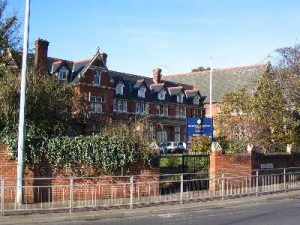
Pate’s Grammar is the highest-ranked co-educational school in the Top 10. It is particularly relevant if you prefer a mixed-school environment rather than one of the single-sex grammars that dominate the upper end of the ranking.

The important point is not to read numbers 1–10 as ten interchangeable schools. The academic level is consistently high, but the gender mix, entrance examination, geography and admissions priorities vary substantially.
Best Grammar Schools in London
London has some of the strongest grammar schools in the country, but “London” is not one admissions system. Barnet, Sutton, Kingston upon Thames and Bromley all have different selective-school processes.
This is where Hong Kong families can make an expensive planning mistake. Moving to London does not mean that one registration covers all of the best grammar schools in London. QE Barnet, Henrietta Barnett, Wilson’s, St Olave’s and the two Tiffin schools operate different tests and deadlines.
| School / 2026 Grammar Rank | Academic Performance | Admissions Competitiveness / Location | Sixth Form Opportunities |
|---|---|---|---|
| Queen Elizabeth’s School, Barnet — #1 | 97.6% A-level A*–B; 95.5% GCSE 9–7 | Barnet. English + Mathematics selective test; PAN 180; no catchment, so rank order is crucial. | Large A-level Sixth Form with strong university preparation; Sixth Form has separate entry criteria. |
| Wilson’s School — #2 | 95.4% A-level A*–B; 97.4% GCSE 9–7 | Wallington, Sutton. SET plus second-stage examination; PAN 186. Tests must be taken in person. | A-level Sixth Form with opportunities for external applicants through a separate selective process. |
| St Olave’s Grammar School — #3 | 95.1% A-level A*–B; 89.7% GCSE 9–7 | Orpington, Bromley. Highly competitive two-stage school-specific selection. | Mixed Sixth Form with a broad A-level curriculum and a consistently very strong academic profile. |
| The Tiffin Girls’ School — #5 | 89.9% A-level A*–B; 95.7% GCSE 9–7 | Kingston upon Thames. Two-stage tests; PAN 180; Designated Area and Inner Area priorities materially affect allocation. | A-level Sixth Form. The 2026 arrangements provide at least 20 external places subject to GCSE requirements and availability. |
| The Henrietta Barnett School — #8 | 86.0% A-level A*–B; 97.2% GCSE 9–7 | Hampstead Garden Suburb, Barnet. Two rounds of testing and PAN 120 create intense competition. | A-level Sixth Form with at least 30 external places annually and separate GCSE-based requirements. |
| Tiffin School — #11 | 2026 ranking profile: 91.8% A-level A*–B; 79.8% GCSE 9–7. The school reported its best-ever GCSE results in August 2026. | Kingston upon Thames. Two-stage selection, PAN 180 and a Priority Area that affects allocation. | Mixed Sixth Form with external entry; applicants submit GCSE evidence through the Sixth Form admissions process. |
The most important London difference is geography.
QE Barnet has no catchment area. A sufficiently high test score can therefore make a boy eligible regardless of where in England he lives, although a family still needs a practical home-to-school journey if he actually enrols.
The Tiffin Girls’ School works very differently. Its current policy gives significant priority to qualifying girls living within defined geographical areas. Recent admissions patterns have shown how important those boundaries are. A girl can be academically capable of passing both stages but still find that location affects the chance of an offer.
Tiffin School also uses a Priority Area. Wilson’s selection works through the Sutton test system. St Olave’s runs another school-specific test. Henrietta Barnett starts with verbal reasoning, non-verbal reasoning and English, then narrows the field for a second round containing English and Mathematics.
Preparing a child for “the London 11+” as though one standard paper exists can therefore waste time. You should decide which schools are geographically realistic first, then map the test formats.
The timing is equally strict. For the current admissions cycle, QE Barnet required entrance-test requests by noon on 8 July 2026, with tests on 16 and 17 September. Wilson’s registration closed on 31 July 2026, with the SET on 15 September and the boys’ second stage on 3 October. Tiffin School opened its current Year 7 registration in June 2026 and closes it at noon on 1 September.
Missing a registration deadline generally cannot be fixed by placing the school on your Common Application Form later. You need to complete both parts of the process: the school’s test registration and your home local authority’s secondary-school application.
Sixth Form changes the picture again. The best grammar schools in London often admit external applicants at 16+, but the 11+ test is no longer relevant. Admission normally depends on GCSE results and subject-specific thresholds.
The Tiffin Girls’ School, for example, requires eight full-course GCSE passes for its Sixth Form. Four must be at grade 7 or above and another four at grade 6 or above, including English, Mathematics and a science. The Henrietta Barnett School offers a minimum of 30 places annually to external Sixth Form applicants. Tiffin School also has an external Sixth Form route with its own application timetable.
This can be useful for a Hong Kong family arriving in Britain later. Missing Year 7 grammar entry does not necessarily close every route permanently. Sixth Form can provide another point of entry, but competition remains high and the subject thresholds are demanding.
How Do the Best Secondary Schools in the UK Compare?
The phrase best secondary schools in UK covers several fundamentally different sectors. A grammar school is a state-funded school selecting by academic ability. An independent school charges fees and sets its own admissions arrangements. There are also high-performing comprehensive schools and specialist sixth-form institutions.
When these sectors are combined in the Parent Power 2026 secondary table, two grammar schools appear inside the national Top 10 alongside some of the best-known independent schools.
| 2026 Combined Rank | School / Sector | Admissions & Fee Model | What the Position Shows |
|---|---|---|---|
| 1 | St Paul’s School — Independent | Fee-charging school with its own selective admissions | Independent schools occupy several of the highest combined positions. |
| 2 | Brighton College — Independent | Fee-charging independent day and boarding school | Academic ranking alone does not show the major difference in cost or boarding provision. |
| 3 | North London Collegiate School — Independent | Fee-charging selective girls’ school | A high academic rank does not make its admissions or financial model comparable with grammar schools. |
| 4 | Godolphin and Latymer School — Independent | Fee-charging selective girls’ school | Academic outcomes may resemble leading grammars, while the route to admission is entirely different. |
| 5 | Guildford High School — Independent | Fee-charging selective girls’ school | Location, fees and school environment remain important beyond league-table position. |
| 6= | Queen Elizabeth’s School, Barnet — Grammar | State-funded; no tuition fee; selective Year 7 entrance examination | A free state grammar can rank alongside the highest-performing independent schools academically. |
| 6= | St Paul’s Girls’ School — Independent | Fee-charging selective girls’ school | The joint ranking demonstrates why school sector must accompany an overall academic position. |
| 8 | King’s College School, Wimbledon — Independent | Fee-charging selective school | Curriculum and financial commitment differ substantially from grammar-school education. |
| 9 | Westminster School — Independent | Fee-charging selective day and boarding school | Boarding and day arrangements introduce another factor that exam results cannot measure. |
| 10 | Wilson’s School — Grammar | State-funded; no tuition fee; SET plus second-stage selection | Two grammar schools inside the combined Top 10 illustrate how competitive selective state education can be academically. |
Fresh national results from summer 2026 provide another useful perspective.
Across England, grammar-school centres recorded 43.4% of A-level entries at grade A or above. Independent and private schools were higher at 48.6%. Across all state-funded centres, the equivalent figure was 25.4%.
At GCSE, the pattern was different. Grammar schools recorded 63.2% of entries at grade 7 or above, compared with 47.1% at independent/private schools and 20.6% across all state-funded centres.
These figures show why grammar schools feature so prominently when families search for the best secondary schools in UK. The selective state sector produces exceptionally high raw attainment without charging tuition fees.
But the numbers need interpretation.
Grammar schools select their pupils academically before Year 7. Independent schools are also often selective, especially at the top end, but they use their own examinations, interviews and school reports. A comprehensive admits a much broader range of prior attainment. Comparing raw GCSE grades without considering intake therefore tells you something about outcomes, but not exactly how much educational “value added” each school produced.
This is an important correction to the idea that a school ranked number six must necessarily teach better than a school ranked number 60.
Rankings are particularly strong at measuring attainment. They are much weaker at measuring whether a child enjoys school, receives effective pastoral support, finds the academic pace manageable or has access to the activities that matter personally.
There is also a major financial difference. A grammar-school education is state-funded, so there is no tuition fee. A leading independent day school can require tens of thousands of pounds per year, while boarding raises the figure further. For a family that can realistically secure grammar-school entry, the financial value is obvious.
That does not mean grammar is always the better choice. Independent schools may offer boarding, smaller classes, particular sports, specialist arts provision, different curricula or a level of flexibility that a specific family values. A high-performing comprehensive close to home can also be better for a child who dislikes the pressure associated with an intensely selective peer group.
For Hong Kong families, there is another constraint: grammar schools are normally not an international-student substitute for British boarding schools. They are state schools serving pupils entitled to state education in the UK. A child moving to Britain solely as a fee-paying international pupil cannot simply treat a grammar place like a private-school application. Your family’s immigration and residency position therefore needs to be settled before grammar-school planning becomes meaningful.
How to Choose from the Best Schools in the UK?
A ranking becomes useful when you turn it into a realistic shortlist. For most families, that means removing schools that fail on geography, admissions eligibility or child fit before spending months preparing for tests.
- Confirm that the grammar route is actually available to your family. If you are relocating from Hong Kong, establish your UK residence and state-school eligibility before building an 11+ strategy. Grammar schools are state-funded schools rather than an overseas fee-paying route.
- Map the exact 11+ tests. QE Barnet tests English and Mathematics. Wilson uses the Sutton SET followed by a second stage. Henrietta Barnett uses verbal reasoning, non-verbal reasoning and English in Round One, followed by English and Mathematics. Pate’s uses the Gloucestershire grammar test. Preparing generically for “the 11+” is not enough.
- Check geography before judging rank. QE Barnet has no catchment area, while Tiffin Girls uses defined areas heavily in oversubscription. Tiffin School has a Priority Area. Other counties use local-priority structures of their own. A child can pass a selective test without ultimately receiving a place.
- Compare academic pressure with your child’s personality. A student who enjoys being surrounded by very high-attaining peers may thrive at QE, Wilson or Henrietta Barnett. Another child may become anxious in the same environment. Visit the school and listen to how current pupils describe workload, homework and competition.
- Look beyond GCSE percentages. Check A-level subject choice, Further Mathematics, sciences, languages, computing, humanities and arts. A Year 7 decision eventually becomes a Sixth Form decision. The best school for a future engineer may not be the best fit for a pupil focused on music or languages.
- Investigate Sixth Form entry separately. Some grammar schools become co-educational at 16+, and many admit external applicants. If your family reaches the UK too late for 11+ entry, Sixth Form may still be an option. Entry will usually depend on GCSE grades rather than the Year 7 test.
- Do not confuse qualifying with receiving an offer. This is especially important in grammar admissions. Passing the test can simply mean your child is eligible to be ranked. Oversubscription criteria, priority areas, rank order and the Common Application Form still determine the final offer.
- Check the daily commute. A top-ten grammar school can become a poor family decision if your child spends two hours travelling every day. Over five school days, a 60-minute journey each way means ten hours a week in transit.
- Use the current admissions policy, not last year’s forum advice. Registration dates, test providers and priority rules change. Pate’s, for example, has already announced future changes to its admissions-test provider beyond the current cycle. Always download the policy for your child’s exact entry year.
- Keep more than one realistic option. A sensible shortlist should contain aspirational grammars, realistic selective choices and strong non-selective alternatives. If you would be unhappy with every school except the number-one ranked option, the shortlist is too narrow.
The first filter should therefore be practical eligibility, not prestige.
Imagine a girl living close to Kingston who performs very strongly in English and Mathematics. Tiffin Girls may be more realistic than Henrietta Barnett even if the latter appears higher or lower in another academic measure, because geography and the exact test structure work differently.
A boy living in Barnet could consider QE, but its lack of catchment does not make it easy: academic rank order remains severe. A boy living in Sutton can prepare for the common SET and then use the second-stage result across several selective boys’ schools, potentially creating a broader local shortlist from one preparation route.
For a co-educational preference, Pate’s immediately becomes more relevant than the many single-sex schools dominating the UK grammar school ranking. A family moving to Greater Manchester should study Altrincham Grammar School for Girls and the Trafford consortium rather than focusing only on famous London names.
Current examination data should also be used intelligently.
Altrincham Grammar School for Girls’ fresh 2026 results show 29% of A-level entries at A*, 70% at A* or A and 90% at A*–B. At GCSE, 33% of entries received grade 9 and 83% were graded 7 or above. Those are strong current results, even though the school sits ninth rather than first in the national grammar ranking.
Tiffin School, ranked eleventh in the grammar table, has just reported its best-ever GCSE performance in August 2026. That is precisely why parents should avoid treating ranking positions as permanent identities. New cohorts graduate every year.
At the same time, do not rebuild your entire shortlist after one results day. A single cohort can be unusually strong or weak. Look for sustained performance, subject suitability, university preparation and how the school treats pupils who are not at the very top of the year.
The same principle applies when comparing grammar schools with the best schools in UK more broadly. QE Barnet being joint sixth in a combined state-and-independent table is impressive, but it tells you little about whether a specific child should choose QE over an independent school, a comprehensive or another grammar.
The more useful final question is: does the school provide an academic level that suits your child, an admissions route your family can realistically complete, a location you can sustain for seven years and a school environment in which your child actually wants to learn?
Used that way, the UK grammar school ranking is valuable. It identifies exceptional academic schools. It does not make the family decision for you.
References
- HK Edu Journey — Iris Leung Author Profile. Author background and independent Hong Kong education-adviser positioning. https://hkedujourney.com/author/
- The Sunday Times — Parent Power 2026: Best State and Grammar Schools. Used for the 2026 national ranking methodology, overall state-school context and awards. https://www.thetimes.com/best-schools-league-table/secondary/article/top-state-grammar-schools-uk-2026-m2068cv5z
- Atom Learning — The Best Grammar Schools in the UK in 2026. Used to compare the Parent Power 2026 order, A-level A*–B percentages, GCSE 9–7 percentages, gender and principal 11+ test routes using one consistent dataset. https://www.atomlearning.com/blog/best-grammar-schools-in-uk
- GOV.UK / Ofqual — Qualification Results in England, Summer 2026. Used for current 2026 sector-wide examination comparisons: grammar schools recorded 43.4% of A-level results at Grade A or above and 63.2% of GCSE results at Grade 7 or above. https://www.gov.uk/government/publications/qualification-results-in-england-summer-2026/qualification-results-in-england-summer-2026
- Queen Elizabeth’s School, Barnet — Admissions. Current 2026 entrance-test timetable, English and Mathematics test structure, admission standard and current Year 7 PAN. https://www.qebarnet.co.uk/admissions-information/admissions/
https://www.qebarnet.co.uk/admissions-information/secondary-transfer-entrance-test-faqs/ - Wilson’s School — Admissions. Current 2026 Selective Eligibility Test, Second Stage Entrance Examination, Year 7 PAN and application rules. https://www.wilsons.school/admissions-faqs/
- The Henrietta Barnett School — Admissions and Exam Results. Current two-stage admissions system, PAN, Sixth Form external entry and academic-performance information. https://www.hbschool.org.uk/admissions/
https://www.hbschool.org.uk/about-us/exam-results/ - Tiffin / Gloucestershire Selective-School Admissions — Current 2026 admissions and Sixth Form information used to verify Priority Area, Designated Area, two-stage testing and Pate’s Grammar entry procedures. https://www.tiffinschool.co.uk/admissions/year-7-admissions/
https://www.patesgs.org/Admissions/Year-7-September-2027-Entry/
Disclaimer
The content of this article reflects the author’s personal views and is provided for informational purposes only. It should not be regarded as professional investment, medical, legal, employment, or other specialist advice. Some information in this article is sourced from publicly available online materials. If any content is found to infringe copyright, please contact the website administrator for prompt removal or correction.
Readers are solely responsible for any actions taken based on the information provided in this article. The website accepts no legal liability for any risks, losses, or damages arising from such actions.
For more details, please see the Disclaimer.